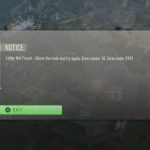
Navigating the competitive arenas of Rocket League demands precision, quick reflexes, and, critically, a stable connection. There’s nothing more frustrating than a perfectly timed aerial shot ruined by sudden lag or, worse, being unable to connect at all. Before you restart your router for the tenth time or blame your ISP, the first, most crucial step is to check the actual rocket league servers status. This initial check can instantly tell you if the issue is on your end or if the entire pitch is experiencing a global outage. Understanding the server landscape saves you precious troubleshooting time, directing your efforts where they matter most.
At a Glance: What You’ll Learn About Rocket League Server Status
- Why Server Status Matters First: Distinguish between a game outage and a personal connection hiccup.
- The Power of Real-Time Tools: How a free status checker provides granular, regional insights for PC, Xbox, PlayStation, and Nintendo Switch.
- Decoding Performance Metrics: Understand latency, average response times, and jitter to gauge connection quality.
- Game Servers vs. Matchmaking: Grasp the critical difference and how both impact your ability to play.
- Optimizing Your Experience: Use live status data to choose the best region and troubleshoot effectively.
- Actionable Next Steps: Practical advice for before, during, and after a server issue.
The Foundation: Rocket League’s Global Server Infrastructure
Rocket League isn’t just running on a single computer somewhere; it’s powered by a robust, enterprise-grade server infrastructure spread across major global data centers. Think of it as a vast network of interconnected regional clusters designed for maximum redundancy, low latency, and high availability. These clusters are responsible for everything from matchmaking and player authentication to the real-time physics and state synchronization that make every goal, save, and demo possible.
However, even with such a sophisticated setup, performance can vary dramatically. Factors like your geographic location, the time of day (peak hours vs. off-peak), and the sheer load on specific servers all play a role. This is precisely why region-specific monitoring of the rocket league servers status is not just helpful, but essential for a smooth gameplay experience.
Server Status vs. Your Internet: A Crucial Distinction
Many players instinctively jump to troubleshooting their home internet connection when they encounter issues in Rocket League. They’ll run speed tests, reset their router, or even contact their ISP. While optimizing your local connection is always a good practice, these steps are futile if the problem lies with the game’s infrastructure itself.
Consider it this way: Checking rocket league servers status is like calling ahead to a restaurant to ask if they’re open. Ping testing, on the other hand, is like driving to the restaurant to see how fast you can get there. If the restaurant is closed (servers are offline), it doesn’t matter how fast your car is (how good your internet connection is)—you still can’t get a meal. By checking the server status first, you avoid wasting time diagnosing personal connection issues when the game’s servers are simply down for maintenance or experiencing a widespread outage.
Unpacking the Live Status Checker: Your Go-To Tool
To empower players with this critical distinction, a free, live status checker tool is readily available. This isn’t just for PC players; it supports all major platforms, including Xbox, PlayStation, and Nintendo Switch. The tool provides a comprehensive, global snapshot, testing server infrastructure across an impressive array of over 19 regions worldwide. This includes key gaming hubs like:
- North America: Virginia, Ohio, California, Oregon, Montreal (Canada)
- Europe: Dublin, London, Paris, Frankfurt, Stockholm
- Asia: Tokyo, Seoul, Osaka, Singapore, Jakarta
- South America: São Paulo
- Middle East: Bahrain, UAE
- Oceania: Sydney
- Africa: Cape Town
- India: Mumbai
The way this tool works is ingenious yet simple: it initiates simultaneous, lightweight connection requests to server infrastructure endpoints in each geographic region. These requests mimic the initial handshake your game client performs, providing realistic and accurate performance data by measuring the complete round-trip time.
Interpreting Real-Time Metrics: What the Checker Reveals
The true power of a server status tool lies in its multi-metric analysis. It doesn’t just say “online” or “offline”; it provides a nuanced view of performance. Here’s a breakdown of what each indicator tells you:
1. Online/Offline Status: The First Gatekeeper
This is the most fundamental check. It indicates whether a regional server cluster is currently accepting connections. If a region shows “Offline” or “Unreachable,” it means that particular cluster is experiencing an outage or is down for scheduled maintenance. In such a scenario, attempting to connect to that region will be fruitless.
2. Latency Measurements: Your Real-Time Responsiveness
Latency, measured in milliseconds (ms), tells you the real-time response time between your device and the game server. Lower numbers are always better, as they indicate quicker communication and less delay in gameplay. The status checker typically color-codes these measurements for immediate understanding:
- Green (<200ms): Excellent performance. Expect smooth, responsive gameplay.
- Yellow (200-300ms): Acceptable. You might notice slight delays, but generally playable.
- Orange (300-399ms): Elevated. Delays become more noticeable and can impact competitive play.
- Red (400ms+): Problematic. Significant lag, often leading to frustrating and unplayable conditions.
Mini-Example: If you check the status and see your usual North America (Ohio) server showing a green 35ms, but the North America (California) server shows a red 480ms, it’s a clear signal to avoid California for now.
3. Average Response Times: Gauging Consistency
While instantaneous latency is important, a rolling average of response times over multiple checks provides a more consistent indication of server performance. A fluctuating instantaneous latency that settles into a stable, low average suggests brief spikes, whereas a consistently high average points to a persistent issue. This metric helps you understand the overall health trend of a server, not just a single snapshot.
4. Jitter Analysis: The Metric for Stability
Jitter measures the variation in latency over time. In simple terms, it tells you how stable your connection to the server is. High jitter means your latency is constantly fluctuating, even if the average isn’t terrible. This manifests in-game as “rubber banding,” sudden teleportations, or inconsistent hit registrations, making for a highly unstable and frustrating experience. A low jitter value, conversely, indicates a smooth and predictable connection, even if the latency itself isn’t exceptionally low.
5. Best Server Identification: Intelligent Region Choice
A truly helpful status checker doesn’t just present data; it interprets it for you. Based on your current network conditions, it automatically identifies and highlights the best-performing server region. This takes the guesswork out of choosing where to play, especially if your primary region is experiencing issues or if you’re trying to find the optimal connection from a new location.
For a comprehensive guide covering even more detailed troubleshooting and optimization strategies, consult the Rocket League server status guide.
Beyond the Game Server: Understanding Matchmaking Status
Here’s a crucial distinction many players miss: Rocket League’s matchmaking system operates via dedicated backend services that are separate from the game servers themselves. This means you could have perfectly healthy game servers—all green lights and low latency—yet still struggle with long queue times or matchmaking errors.
The matchmaking process is complex, involving:
- Authentication: Verifying your account.
- Rank Validation: Checking your competitive tier.
- Region Preference: Honoring your chosen server regions.
- Skill-Based Calculations: Finding similarly skilled opponents.
- Game Server Assignment: Placing you into an available game instance.
If any of these backend matchmaking services are degraded or experiencing high load, you’ll face issues finding a match, even if the eventual game server you’d play on is perfectly fine. The rocket league servers status checker also evaluates matchmaking responsiveness across all regions. For example, while North America (Virginia, Ohio) generally boasts high availability for matchmaking, regions like South America (São Paulo) might experience elevated queue times during peak hours due to matchmaking server load. By checking matchmaking status, you can avoid wasting time in search loops when these services are the actual bottleneck.
Practical Playbook: Using Live Status Data to Optimize Your Play
Armed with real-time rocket league servers status information, you can make informed decisions that significantly improve your gaming experience.
1. Your Pre-Game Ritual: The Quick Check
Before diving into a competitive ranked match, always perform a quick check of the rocket league servers status. This takes mere seconds and can prevent minutes or even hours of frustration. If your preferred region is showing orange or red latency, high jitter, or matchmaking issues, adjust your plan immediately.
2. Strategic Region Selection
Don’t blindly stick to your default region. Use the “Best Server Identification” feature of the status checker. If your closest server is struggling, or if another region offers surprisingly better performance, switch! Playing on a slightly higher latency server that is stable (low jitter, consistent average response) is almost always preferable to a closer server with high jitter and erratic performance.
3. Navigating Issues: A Quick Decision Tree
- Scenario 1: Regional Servers Are Offline/Unreachable.
- Action: Do not attempt to play in that region. If all regions are offline, Rocket League is experiencing a widespread outage. The only course of action is to wait for official announcements from Psyonix or for the status checker to show services restored.
- Case Snippet: “One evening, Liam saw his usual EU (London) server marked ‘Unreachable.’ Instead of trying repeatedly, he immediately checked Reddit and confirmed a widespread EU outage, saving himself the hassle of troubleshooting his internet.”
- Scenario 2: Game Servers Are Online, But High Latency/Jitter in Your Region.
- Action: First, check if other nearby regions offer better performance. If they do, switch your in-game region preference. If all regions show poor performance for you, and your local internet seems fine (based on a speed test to a general internet server), the issue might be with your ISP’s routing to Rocket League’s data centers.
- Scenario 3: Game Servers Are Healthy, But Matchmaking Is Slow/Failing.
- Action: This indicates an issue with the backend matchmaking services. If only your region’s matchmaking is affected, try switching to a different, healthy region. If matchmaking is slow across all regions, the problem is likely widespread. Waiting is often the best solution here, as these services usually recover quickly.
4. Empowering Your ISP Conversations
If you suspect your ISP is causing routing issues to Rocket League servers, the specific data from a server status checker is invaluable. Instead of just saying “my Rocket League is laggy,” you can tell your ISP: “I’m experiencing 350ms latency and high jitter to the Ohio server (IP address X.X.X.X) specifically, while the Virginia server (IP address Y.Y.Y.Y) is only 40ms. Can you investigate routing path differences?” This precise information can help them diagnose the issue much faster.
Quick Answers: Your Top Rocket League Server Status Questions
Q: Is Rocket League down right now?
A: The most reliable way to find out is by using a live server status checker tool. It provides real-time information across all regions. As an example, during a past check on March 26, 2026, at 11:50 AM PDT, Rocket League was reported to be working normally with zero user-reported issues in the preceding 24 hours. A live tool would provide similar up-to-the-minute details for today.
Q: What causes Rocket League server issues?
A: Server issues can stem from various sources:
- Scheduled Maintenance: Necessary updates or backend work.
- Infrastructure Outages: Hardware failures or power issues in data centers.
- DDoS Attacks: Malicious attempts to overwhelm servers.
- High Server Load: Unexpected spikes in player count during peak times.
- Regional Network Problems: Issues with internet backbone providers affecting connectivity to certain areas.
Q: Can I fix Rocket League server issues on my end?
A: No, you cannot directly “fix” problems with Rocket League’s servers; that’s Psyonix’s responsibility. However, you can mitigate their impact by:
- Optimizing your local internet connection (wired connection, prioritizing game traffic).
- Using the server status tool to choose the best-performing server region.
- Adjusting your in-game settings (e.g., performance mode) to reduce strain on your system.
Q: How often should I check the Rocket League servers status?
A: Ideally, you should perform a quick check before every significant play session, especially if you’re planning to play competitive or ranked matches. It’s also wise to check if you suddenly encounter lag or connectivity issues mid-session.
Q: Does Rocket League server status affect my in-game ping?
A: Absolutely. While your personal internet connection quality is a major factor in your in-game ping, the health and performance of the game server itself also directly influence it. A server experiencing high load, latency spikes, or instability will result in higher and more inconsistent ping readings for all connected players, regardless of their individual internet speed. Conversely, a healthy, low-latency server provides the best foundation for your connection.
Mastering Your Rocket League Connectivity
Understanding and actively monitoring the rocket league servers status is no longer just for the tech-savvy; it’s a fundamental skill for any serious player. By integrating a quick server status check into your pre-game routine, you transform from a frustrated player wondering “Is it me or them?” to an informed strategist who can quickly identify problems, choose optimal connections, and get back to the pitch with minimal delay. This proactive approach empowers you to take control of your Rocket League experience, ensuring that when you hit that perfect flip reset, it’s due to your skill, not server luck.