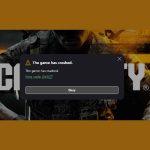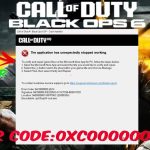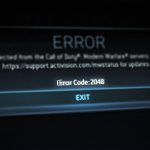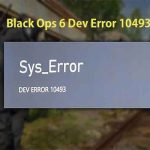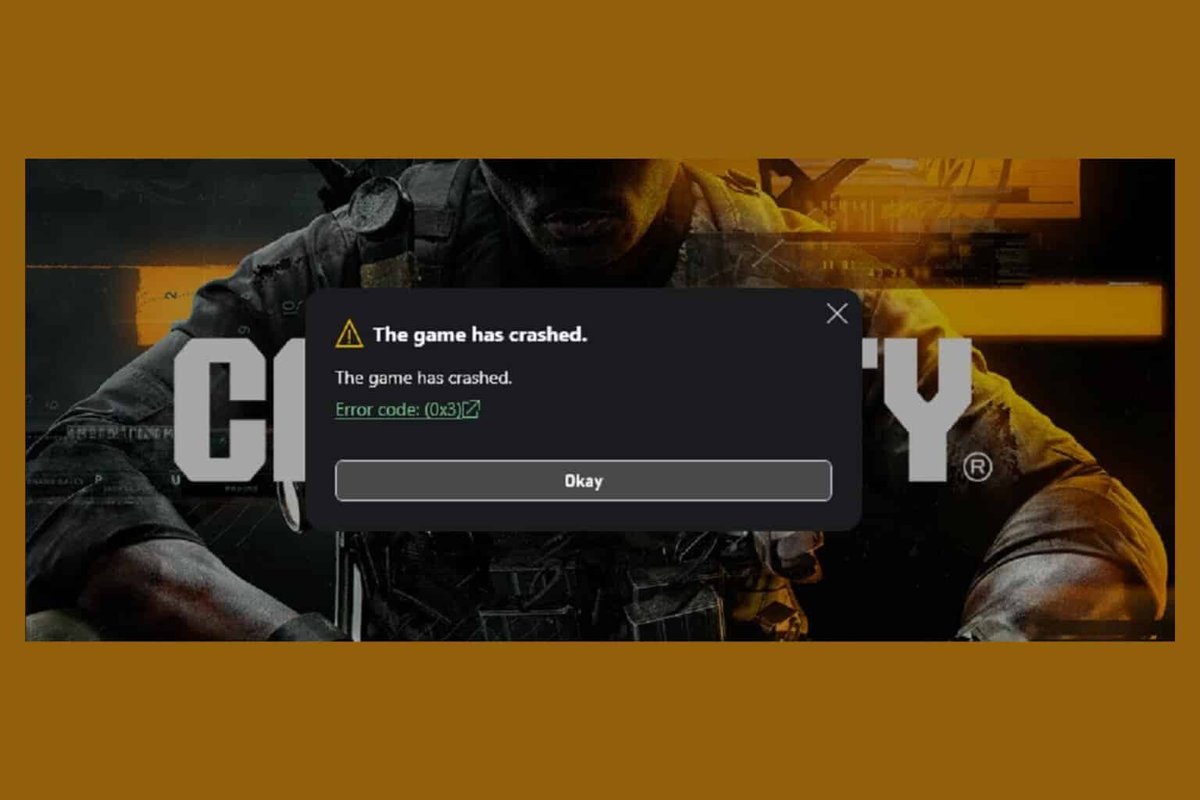
Few things are more frustrating than settling in for a Black Ops 6 session, only to be met with the cryptic message: “error cause 10 error code 2030 bo6.” This isn’t just a random number string; it’s the game telling you, quite specifically, that something on your end is jamming the signal, preventing you from linking up with the servers or joining a lobby. Unlike broader server outages, a “cause 10” typically points to a localized issue, often tied to your network setup, system files, or how your game client is behaving.
At a Glance: Solving “Error Cause 10 Error Code 2030 BO6”
- Network First: The most frequent culprit is a local network issue. Focus on connection stability, router health, and potential firewall blocks.
- Game File Integrity: Corrupted or missing game files can trigger this specific error. Verifying your game’s installation is a critical step.
- System & Driver Updates: Outdated graphics drivers or a clogged system cache can unexpectedly interfere with game connectivity.
- DNS & VPN Check: Your Domain Name System (DNS) settings and any active VPN can sometimes misroute or block game connections.
- Account Re-Sync: For Game Pass users, re-logging into your Activision account after clearing browser data can resolve synchronization issues.
- Proactive Prevention: Regular system maintenance and stable network practices reduce the likelihood of encountering this error again.
Understanding the “Cause 10” Behind Error Code 2030
When Black Ops 6 throws up “error cause 10 error code 2030 bo6,” it’s essentially a diagnostic flag. “Error Code 2030” itself typically signifies a failure to establish a secure or stable connection to the game’s online services. The “Cause 10” modifier narrows it down significantly: it points to a problem originating locally on your machine or within your immediate network environment, rather than a widespread server outage or an issue with your Activision account itself.
Think of it this way: your game client is trying to dial out to the Black Ops 6 servers, but something on your side is either preventing the call from going through, scrambling the signal, or the receiver isn’t recognizing your specific “handshake.” This often means delving into your network configuration, ensuring your game files are pristine, and checking for any software conflicts that might be silently interfering.
Your Troubleshooting Playbook: Step-by-Step Fixes
Let’s break down the most effective strategies to get past “error cause 10 error code 2030 bo6” and back into the action. We’ll start with the simplest, most common fixes and progressively move to more in-depth solutions.
The Foundation: Basic Restarts and Checks
Before diving into complex diagnostics, it’s always wise to perform basic restarts. These actions clear temporary glitches, refresh network connections, and often resolve minor software conflicts that could manifest as a “cause 10” error.
Power Cycling Your Network Equipment
Your router and modem are the gatekeepers of your internet connection. They can sometimes get overwhelmed or encounter temporary software bugs that disrupt specific game connections. A full power cycle forces them to refresh their internal state and re-establish a fresh connection with your ISP and the wider internet.
How to do it:
- Unplug your router and modem from their power outlets.
- Wait for at least 30 seconds. This isn’t just a suggestion; it’s crucial for the internal capacitors to fully discharge, ensuring a complete reset.
- Plug your modem back in first. Wait for all its indicator lights to stabilize (usually solid green or blue).
- Then, plug your router back in and wait for its lights to stabilize as well.
- Once both are fully online, restart your gaming device (PC or console).
Case Snippet: A player reported constantly getting “error cause 10 error code 2030 bo6” every time they tried to join a match. A simple router power cycle, which they hadn’t done in weeks, immediately resolved the issue, suggesting a cached routing error or minor firmware glitch.
Restarting Your Game and Device
Sometimes, the game client itself or your console/PC operating system can hit a temporary snag. A clean restart can clear out these transient issues.
How to do it:
- Close Black Ops 6 completely: Ensure the game is fully exited, not just minimized.
- Restart your PC or console: A full system restart (not just sleep mode) flushes temporary memory, reinitializes system services, and often resolves underlying software conflicts.
Fortifying Your Game Files: Integrity and Updates
A “cause 10” error can directly point to issues with the game’s local installation. If Black Ops 6 can’t find critical files or encounters corrupted data, it won’t be able to properly initiate an online session.
Verifying Game File Integrity
This process scans your Black Ops 6 installation against a master copy stored on the game’s servers, identifying and replacing any corrupted, missing, or outdated files. This is particularly effective for “cause 10” errors, as it directly addresses potential local file issues.
Platform-Specific Steps:
- Battle.net (PC):
- Open the Battle.net client.
- Navigate to the Call of Duty: Black Ops 6 game page.
- Click the cogwheel icon (Options) next to the “Play” button.
- Select “Scan and Repair” and then click “Begin Scan.”
- Steam (PC):
- Open your Steam Library.
- Right-click on Call of Duty: Black Ops 6.
- Select “Properties.”
- Go to the “Installed Files” or “Local Files” tab.
- Click “Verify integrity of game files.”
- Xbox App (PC):
- Open the Xbox app.
- Right-click on Call of Duty: Black Ops 6.
- Go to “Manage” and then the “Files” tab.
- Click “Verify and Repair.”
- PlayStation (Console):
- Go to your Game Library.
- Highlight Black Ops 6.
- Press the “Options” button on your controller.
- Select “Check for Updates.” While not a full file integrity check, this can sometimes repair minor discrepancies or update to a more stable version. If persistent issues remain, consider reinstalling the game.
Why it matters: Imagine trying to read a book where several pages are torn out or scrambled. The story won’t make sense. Similarly, if game files essential for online connectivity are damaged, the game simply can’t function as intended, leading to errors like “cause 10.”
Updating Graphics Drivers
Though less directly related to network errors, outdated graphics drivers can cause unexpected instabilities that cascade into connection issues or game crashes. It’s always a good practice to keep them current.
How to do it:
- Identify your graphics card manufacturer (NVIDIA, AMD).
- Visit their official website (e.g., nvidia.com/drivers or amd.com/support).
- Use their driver utility or manually search for the latest drivers for your specific card model and operating system.
- Download and install the drivers. A clean installation is often recommended.
Deep Dive into Network Troubleshooting
Since “cause 10” strongly hints at a local network problem, a thorough review of your connection settings is crucial. This is where you might find the root cause.
Testing Your Internet Connection
A weak or inconsistent internet connection is a prime suspect. Even if you can browse the web, your connection might not be stable enough for real-time online gaming.
How to do it:
- Visit a reputable speed test website (e.g., Speedtest.net, Fast.com).
- Pay attention to download speed, upload speed, and especially ping (latency). High and fluctuating ping can devastate online game performance and cause connectivity issues.
- Look for consistency. If results vary wildly between tests, you have an unstable connection.
Switching to a Wired (Ethernet) Connection
Wi-Fi is convenient, but it’s prone to interference, signal drops, and higher latency compared to a wired connection. For critical gaming sessions, Ethernet is king.
Why it matters: Wireless signals can be disrupted by microwaves, other Wi-Fi networks, even your neighbor’s Bluetooth devices. A physical cable eliminates these variables, providing a direct, stable pipeline to your router.
Experimenting with DNS Settings
Your Domain Name System (DNS) server translates website names (like activision.com) into IP addresses that computers understand. Sometimes, your ISP’s default DNS servers can be slow, unreliable, or even have issues resolving game server addresses. Switching to a public, reputable DNS can often improve connectivity and resolve connection errors.
Popular Public DNS Options:
- Google DNS: Primary 8.8.8.8, Secondary 8.8.4.4
- Cloudflare DNS: Primary 1.1.1.1, Secondary 1.0.0.1
How to change DNS (PC – Windows):
- Open Control Panel > Network and Internet > Network and Sharing Center.
- Click “Change adapter settings” on the left.
- Right-click your active network adapter (Ethernet or Wi-Fi) and select “Properties.”
- Select “Internet Protocol Version 4 (TCP/IPv4)” and click “Properties.”
- Choose “Use the following DNS server addresses” and enter the primary and secondary DNS.
- Click “OK” on all windows and restart your PC.
How to change DNS (Console – generally in Network Settings):
- Xbox: Settings > General > Network settings > Advanced settings > DNS settings > Manual.
- PlayStation: Settings > Network > Set up Internet Connection > Wi-Fi/LAN > Custom > IP Address Settings (Automatic) > DHCP Host Name (Do Not Specify) > DNS Settings (Manual).
Example: A player continuously faced “error cause 10 error code 2030 bo6” when trying to connect to Black Ops 6 after a recent ISP infrastructure upgrade. Switching from their ISP’s default DNS to Cloudflare’s 1.1.1.1 immediately resolved the issue, indicating a problem with their ISP’s DNS routing to Activision’s servers.
Checking Firewall and Antivirus Settings
Firewalls and antivirus software are essential for security, but they can sometimes be overly aggressive and block legitimate game connections, mistaking them for threats. This is a very common cause of “cause 10” errors.
How to do it:
- Temporarily Disable: For testing purposes, temporarily disable your Windows Firewall (or third-party firewall/antivirus) and try launching Black Ops 6.
- Windows Firewall: Search “Windows Defender Firewall” in the Start menu > “Turn Windows Defender Firewall on or off” > select “Turn off Windows Defender Firewall” for both private and public networks. Remember to re-enable it after testing!
- Add Exceptions: If disabling the firewall fixes the issue, you need to add Black Ops 6 and its associated executables (e.g.,
cod.exe,launcher.exe) as exceptions or allow rules in your firewall/antivirus software. Consult your specific software’s documentation for exact steps. - Router Firewall: Your router also has a built-in firewall. While less common to block games by default, if you’ve configured custom rules or have strict settings, you might need to check them.
Disabling VPNs or Proxy Servers
If you’re using a Virtual Private Network (VPN) or a proxy server, it can interfere with Black Ops 6’s connection to its servers. VPNs encrypt and reroute your traffic, which can introduce latency, instability, or even place you in a region where connection to specific game servers is problematic.
Action:
- Disable your VPN or proxy entirely.
- Restart Black Ops 6 and try to connect again.
- If this resolves the error, consider using a gaming-optimized VPN (if necessary) or playing without one for Black Ops 6.
Account & Game Pass Specific Solutions (for related contexts)
While “cause 10” is often client-side, some issues, especially for Game Pass users, can manifest in ways that look like client-side errors but are tied to account authentication. If the above fixes haven’t worked, consider these, which overlap with broader Black Ops 6 connectivity problems. For more comprehensive solutions related to broader Black Ops 6 connection issues, including server-side and Game Pass specific problems that might cause similar symptoms, refer to our main guide: How to Fix Error 2901 BO6.
Re-logging to Activision Account (Game Pass Users)
For players accessing Black Ops 6 via Game Pass, your Activision ID might occasionally get de-synchronized or encounter cache issues, leading to connectivity errors.
How to do it:
- Launch Black Ops 6 via Game Pass.
- Navigate to the game’s Settings (usually a gear icon).
- Look for “Account & Network” or a similar section.
- When prompted or if a browser pop-up appears for Activision login, clear its cache and cookies before re-logging. This ensures a fresh authentication.
- Re-login to your Activision account.
Pitfall: Many players forget to clear the browser’s cache, which can cause the old, problematic login data to persist, making the re-login attempt ineffective.
Setting “Home Xbox” (Xbox Console Users with Game Pass)
This is specific to Xbox consoles and Game Pass sharing. If your primary Game Pass account isn’t set as the “home Xbox,” the console might struggle with game ownership verification, leading to online service connection issues.
How to do it:
- Log in to the Xbox account that owns the Game Pass subscription.
- Press the Xbox button on your controller to open the guide.
- Go to Profile & system > Settings > General > Personalization.
- Select “My home Xbox” and choose “Make this my home Xbox.”
Quick Answers to Common Questions
Is “error cause 10 error code 2030 bo6” a server-side problem?
Generally, no. The “Cause 10” specifically points to an issue on your client or local network. If it were a server-side problem, you’d likely see a different error code, or “Lobby Not Found” without the “cause 10” qualifier, affecting many players simultaneously.
Does reinstalling Black Ops 6 always fix this error?
Reinstalling is a drastic step, but it can resolve issues related to deeply corrupted game files or installation problems that a simple “Scan and Repair” might miss. However, it’s best to try all other less time-consuming fixes first, as it often takes a significant amount of time and bandwidth.
Can my ISP be blocking my connection to Black Ops 6?
It’s possible, though less common. Some ISPs might employ strict firewalls or traffic shaping that inadvertently affect game connections. If all other troubleshooting fails, especially after trying a different internet connection (like a mobile hotspot), contacting your ISP to inquire about any network restrictions or port blocking could be a necessary step.
What ports does Black Ops 6 use, and should I open them?
Black Ops 6, like most Call of Duty titles, uses specific ports for online play. While most routers handle this automatically via UPnP (Universal Plug and Play), sometimes manual port forwarding is needed, especially if your NAT type is strict.
Common Ports (may vary slightly):
- TCP: 3074, 27015-27030, 27036, 27037, 4380, 5183, 6672, 8080
- UDP: 3074, 3478, 4379-4380, 27000-27031, 27036
Consult Activision’s official support for the most up-to-date port information for Black Ops 6. Port forwarding should be a last resort and only done if you understand the implications, as it can potentially expose your network to minor security risks if not done correctly.
Your Actionable Close: Getting Back in the Game
Facing “error cause 10 error code 2030 bo6” can be a nuisance, but with a structured approach, it’s often a solvable problem. Start by diagnosing where the issue lies – usually, it’s a network glitch or a problem with your game files.
Here’s a quick decision tree:
- Did you just start getting the error?
- Yes: Start with basic restarts (game, device, router/modem). Then, verify game file integrity.
- No, it’s been ongoing: Move directly to network diagnostics (speed test, wired connection, DNS change, firewall/antivirus check).
- Are you using Game Pass on Xbox?
- Yes: Ensure your “Home Xbox” is set correctly and re-login to your Activision account after clearing browser cache.
- Have you tried a different internet connection (e.g., mobile hotspot)?
- Yes, and it worked: The issue is definitively with your primary ISP or home network setup. Focus on router settings, firewall, or contact your ISP.
- No, it didn’t work: This points more strongly to corrupted game files, system-level issues, or specific software conflicts on your PC/console.
Remember, patience and methodical troubleshooting are key. Most “cause 10” errors are resolved by addressing local client-side factors. Work through these steps, and you’ll likely find yourself back in the Black Ops 6 fight, leaving that pesky error behind. If all else fails and server status is confirmed as normal, don’t hesitate to reach out to Activision Support with details of the troubleshooting you’ve already completed.

- How to Fix Error Cause 10 Error Code 2030 BO6 - May 21, 2026
- Resolve Black Ops 6 Error Code 2029 Game Connection Issues - May 20, 2026
- How To Fix Error Code 2030 BO6 with Effective Solutions - May 19, 2026