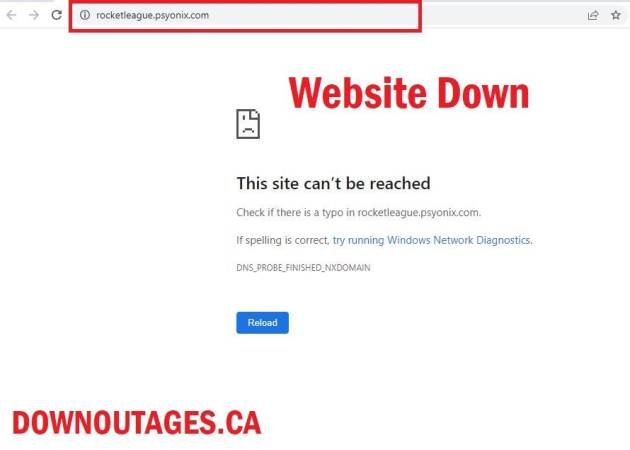
You’ve fired up your console or PC, ready for some high-flying, goal-scoring action, only to be met with a frustrating connection error. Immediately, the question pops into your head: is League down right now? It’s a common moment of panic for any Rocket League player. Pinpointing whether the issue lies with Psyonix’s servers or your own setup can save you a lot of wasted time and frustration. Let’s cut through the noise and figure out what’s really going on.
At a Glance: How to Check Rocket League Status
- Official Sources First: Always check Rocket League’s official social media channels and status pages for real-time, verified outage reports.
- Cross-Reference with Third Parties: Use reliable independent server monitors (like IsDown or Downdetector) to confirm widespread issues.
- Don’t Jump to Conclusions: If official sources say “UP,” your problem is likely local.
- Know Your Components: Rocket League’s services are modular; an issue with Matchmaking might not mean the entire game is offline.
- Troubleshoot Locally: If servers are clear, simple steps like flushing your DNS or restarting your router often resolve personal connectivity hiccups.
The Immediate Check: Is Rocket League Down for Everyone or Just Me?
When you can’t connect, your first priority is to determine if it’s a global server problem or something specific to your connection. The fastest way to get a definitive answer is by checking official and reputable third-party status trackers.
As of the latest reports (specifically, March 26, 2026, 11:50 AM PDT), Rocket-league.com and its core services are confirmed as fully operational. This means the primary website is accessible, and critically, the game’s various components are all running smoothly. This includes:
- Game Services: The backend systems that run the game itself.
- Item Shop: Access to in-game purchases and inventory.
- Login: Your ability to authenticate and access your account.
- Matchmaking: The system that pairs you with other players for games.
- Parties, Friends, and Messaging: Social features crucial for team play.
- Stats and Leaderboards: Tracking your progress and global rankings.
- Voice Chat: In-game communication.
- Website: The primary information hub.
When all these show an “OK” status, it’s a strong indicator that the problem isn’t a widespread Rocket League server outage. For a more comprehensive overview of server performance and regional connectivity issues, you can always refer to our broader guide on Rocket League live server status.
Leveraging Third-Party Monitors for Confirmation
While official sources are paramount, independent platforms like Downdetector and IsDown provide valuable real-time insights based on user reports. These sites aggregate complaints from thousands of players, allowing you to quickly see if many others are experiencing similar problems.
- Downdetector.com: This site uses a combination of direct user reports and monitoring of official sources to display a graph of reported problems. A spike here often correlates with a major incident.
- IsDown.com: This service goes a step further, meticulously monitoring Rocket League (and its associated Epic Games services) since June 2020. They track 79 components in real-time and correlate their findings with official status pages. Their data indicates that as of the latest check, there are no current issues with Rocket League, nor any significant user reports in the last 24 hours.
If these independent monitors show a flatline of “no problems” while you’re struggling, it’s time to shift your focus from Psyonix’s data centers to your personal setup.
Understanding Rocket League’s Connectivity: More Than Just “Online”
Rocket League is more than just a game; it’s a sophisticated online ecosystem. Developed and published by Psyonix, it’s a vehicle soccer video game that thrives on competitive multiplayer, cross-platform play, ranked matches, casual modes, and customizable cars. Its appeal lies in instant online access and fast-paced action.
Because it relies on multiple components, an issue with one specific service (like just matchmaking) can make the game feel “down” even if other parts (like logging in or browsing the Item Shop) are still functional. Think of it like a restaurant: the kitchen might be working fine, but if the hostess station is down, you can’t get a table.
A Look at Historical Incidents
IsDown has been tracking Rocket League’s performance closely, recording 66 total incidents across all its components since June 2020. Out of these, 51 were specifically Rocket League-related, typically resolving within an average of 355 minutes.
More recently, Epic Games (which hosts many of Rocket League’s underlying services) has seen 6 incidents in the last 90 days alone, with a median duration of 43 minutes. This includes two “major outages” and four “minor incidents.” A recent example of a localized problem was the “Rocket League Matchmaking Issues” on March 14, 2026, which lasted for 38 minutes. This illustrates that even when the overall server status is green, specific functionalities can experience brief, impactful disruptions.
This historical data underscores an important point: server issues, while relatively infrequent for major components, do happen. Knowing where to look for current information ensures you’re reacting to reliable data, not just assumptions.
When Rocket League is “UP” but You’re “DOWN”: Troubleshooting Your End
If the official channels and third-party monitors all report Rocket League servers are healthy, but you’re still experiencing connectivity problems, the spotlight shifts to your local environment. Here’s a systematic approach to identifying and resolving common client-side issues.
1. The Local Network Refresh: Your Router and Modem
Often, the simplest solution is the most effective. Your home network equipment can sometimes get bogged down or misconfigured, leading to connection drops or failures.
- Power Cycle Your Router and Modem:
- Unplug both your internet modem and Wi-Fi router from their power sources.
- Wait for at least 30-60 seconds.
- Plug the modem back in first and wait for all its indicator lights to stabilize (this can take a few minutes).
- Then, plug your router back in and wait for its lights to stabilize.
- Once everything is powered up and stable, try connecting to Rocket League again.
- Consider a Wired Connection: If you’re on Wi-Fi, temporarily switch to an Ethernet cable. Wireless connections are prone to interference and signal degradation, which can lead to lag and disconnects even when your internet is otherwise functional. A wired connection offers a more stable and direct path to your router.
2. DNS Issues: The Internet’s Phonebook Problem
Your Domain Name System (DNS) is like the internet’s phonebook. It translates human-readable website names (like rocket-league.com) into computer-readable IP addresses (e.g., 192.168.x.x). Most internet service providers (ISPs) provide their own DNS servers, but sometimes these can become slow, outdated, or unresponsive, preventing your computer from finding the game servers.
How to Address DNS-Related Connectivity:
- Flush Your Local DNS Cache: Your computer stores a local cache of DNS lookups to speed up future requests. If an old, incorrect entry is cached, it can prevent you from connecting to a server that has updated its IP address.
- For Windows Users:
- Type
cmdinto the Windows search bar (or right-click the Start button and select “Run,” then typecmd). - Right-click “Command Prompt” and select “Run as administrator.”
- In the Command Prompt window, type
ipconfig /flushdnsand press Enter. - You should see a confirmation message like “Successfully flushed the DNS Resolver Cache.”
- Restart your computer for good measure, then try Rocket League again.
- Consider Alternative DNS Services: If flushing your DNS cache doesn’t help, and you find that Rocket League works on another network (like your phone’s 3G/4G/5G data connection, or at a friend’s house) but not on your home Wi-Fi, your ISP’s DNS might be the culprit. Switching to a public DNS service can often resolve this.
- Popular Alternatives:
- Google DNS: Primary
8.8.8.8, Secondary8.8.4.4 - OpenDNS: Primary
208.67.222.222, Secondary208.67.220.220 - How to Change DNS (Windows Example):
- Go to Control Panel > Network and Sharing Center > Change adapter settings.
- Right-click your active network connection (e.g., “Ethernet” or “Wi-Fi”) and select “Properties.”
- Select “Internet Protocol Version 4 (TCP/IPv4)” and click “Properties.”
- Select “Use the following DNS server addresses” and enter your chosen primary and secondary DNS.
- Click “OK” on both windows to apply changes.
- Flush your DNS cache again after making this change, and restart your computer.
3. Browser-Related Issues (If Accessing Website)
While not directly impacting in-game connectivity, if you’re having trouble accessing the Rocket League website for news, status updates, or account management, browser-specific issues can be the cause.
- Perform a Full Browser Refresh: Press
CTRL + F5(orCMD + Ron Mac) simultaneously to force your browser to reload the page and its content from scratch, bypassing cached versions. - Clear Browser Cache and Cookies: Accumulated temporary files and cookies can sometimes corrupt or interfere with website loading.
- In most browsers, you can access this option through Settings/Options > Privacy & Security > Clear Browsing Data.
- Select “Cached images and files” and “Cookies and other site data,” then clear them for “All time.”
- Restart your browser.
4. Game-Specific and System Checks
Finally, some issues are specific to your game installation or operating system.
- Verify Game Files: Game launchers like Steam or the Epic Games Launcher have built-in tools to check the integrity of your game files. Corrupted or missing files can prevent the game from launching or connecting.
- Epic Games Launcher: Library > Find Rocket League > Click the three dots > Verify.
- Steam: Library > Right-click Rocket League > Properties > Local Files > Verify integrity of game files.
- Update Network Drivers: Outdated network adapter drivers can lead to performance issues. Visit your network adapter manufacturer’s website or your computer manufacturer’s support page to download and install the latest drivers.
- Temporarily Disable Firewall/Antivirus (Caution Advised): Your security software might be overly aggressive and blocking Rocket League’s connection. Temporarily disabling it just to test if you can connect can identify this as a culprit. Remember to re-enable it immediately after testing to maintain your system’s security. If this fixes it, you’ll need to create an exception for Rocket League in your firewall settings.
A Quick Troubleshooting Playbook for Connectivity Issues
Before you jump to drastic measures, follow this sequence to quickly diagnose and fix most “is League down right now?” dilemmas.
- Check Official Rocket League Status: Visit Psyonix’s official channels (Twitter, status page) first. This is your primary source of truth.
- Consult Third-Party Monitors: Cross-reference with sites like Downdetector or IsDown to see if other players are reporting issues. If they’re silent, the problem is likely on your end.
- Restart Your Network Hardware: Power cycle your modem and router completely.
- Flush Your DNS Cache: Open Command Prompt (as administrator) and type
ipconfig /flushdns, then press Enter. - Consider Alternative DNS: If problems persist, try switching to public DNS (Google DNS:
8.8.8.8/8.8.4.4or OpenDNS:208.67.222.222/208.67.220.220). Remember to flush DNS and restart your PC after. - Verify Game File Integrity: Use your game launcher’s built-in tool (Epic Games Launcher or Steam) to check for corrupted files.
- Update Network Drivers: Ensure your network adapter drivers are up to date.
- Test Firewall/Antivirus: Temporarily disable security software to rule out interference (re-enable immediately after testing).
Quick Answers: Your “Is League Down Right Now” FAQs
How reliable are third-party server status checkers?
Third-party checkers like Downdetector and IsDown are generally very reliable for confirming widespread outages. They aggregate user reports and often cross-reference with official channels. While they might show a slight delay in reporting minor, localized issues, for major “is League down right now” events, they’re excellent for immediate confirmation.
What’s the difference between a game server outage and a login issue?
A game server outage means the core services that run the game (like matchmaking or actual gameplay servers) are completely offline or experiencing severe problems. A login issue, on the other hand, means you can’t authenticate your account, but the game servers might still be functional for those already logged in. While related, login problems can sometimes be account-specific or tied to a separate authentication service (like Epic Games’ overall login system), even if Rocket League’s direct game servers are healthy.
Should I reinstall Rocket League if I can’t connect?
Reinstalling Rocket League should be a last resort. It’s a time-consuming process and rarely fixes network connectivity issues that aren’t tied to corrupted game files (which can be fixed by verifying files). Always try the simpler network and DNS troubleshooting steps first.
Does my region affect server status?
Yes, regional servers can experience localized issues even if other regions are fine. A server might be down in, say, North America East, while Europe and Asia are unaffected. This is why some players might be experiencing problems while others are playing normally. Official status pages and some third-party trackers often break down status by region.
Why do I experience lag even if servers are “UP”?
Lag, also known as high ping, can stem from many sources even when Rocket League’s servers are fully operational. These include:
- Your internet connection: Slow speeds, high usage on your home network.
- Wi-Fi interference: Signal degradation or competition with other devices.
- Route to the server: Problems with your ISP’s routing to the game server.
- Firewall/Antivirus: Overly aggressive security software.
- PC performance: An overloaded CPU or GPU can also cause in-game lag.
Checking server status only confirms the game’s core services are online; it doesn’t guarantee a smooth connection path from your location.
Your Next Move: Getting Back to the Arena
When you’re asking “is League down right now?”, the goal is simple: get back to playing Rocket League. Start by verifying the server status through official channels and reliable third-party monitors. If they confirm everything is “UP,” then methodically work through the local troubleshooting steps on your end—from restarting your network equipment to flushing your DNS.
In most cases, these actions will resolve your connectivity woes. If, after all these steps, you still can’t connect and the servers are clearly reported as operational, consider contacting Rocket League support with detailed information about your troubleshooting attempts. But more often than not, a quick check and a simple fix will have you boosting, flipping, and scoring goals in no time.

- Is League Down Right Now? Check Server Outage Status - June 5, 2026
- Check Rocket League Maintenance Status Before You Play - June 4, 2026
- Rocket League Servers Down? Players Report Connection Issues - June 3, 2026